

Published 1 May 2026 · 8-minute read · By VSK Siva Contractors team
Every Tamil Nadu farmer asks this question at some point: open well or borewell? After digging open wells across all 38 districts for over 20 years, our honest answer is — it depends on three things: your water table, your budget, and your long-term water-quality needs. Here is the practical breakdown.
Quick comparison at a glance
| Factor | Open Well | Borewell |
|---|---|---|
| Diameter | 4-15 feet | 4-6 inches |
| Typical depth | 30-80 feet | 200-1000+ feet |
| Water source | Shallow aquifer (rain-recharged) | Confined deep aquifer (slow recharge) |
| Lifespan | 30-50+ years | 5-15 years (water-table dependent) |
| Initial cost | Lower in shallow water-table zones | Lower in deep water-table zones |
| Running cost | Negligible (gravity / small motor) | High (submersible pump + electricity) |
| Water quality | Naturally filtered, cool, low TDS | Higher minerals; fluoride/iron risk |
| Subsidy eligibility | Yes — PMKSY, MGNREGA, state schemes | Limited subsidy options |
When open well is the right choice
If your land's water table is shallower than ~80 feet, an open well almost always wins. This includes the Cauvery delta (Thanjavur, Tiruvarur, Mayiladuthurai), most of Madurai, Vaigai basin areas, coastal Cuddalore and Pondicherry, the Mangalore region, and pockets of Erode and Coimbatore where the table sits at 30-60 feet. In these zones an open well delivers:
- Cleaner, mineral-balanced water suitable for drinking and livestock
- Natural recharge from monsoon — your well refills every year for free
- Much longer working life with one-time construction cost
- Visible and inspectable — you see when silt builds up, when the wall needs work
- Government subsidy support that borewells rarely get
If you're a paddy, banana, coconut, sugarcane, or vegetable farmer, an open well is usually the smarter long-term play. Add a farm pond for monsoon storage and you have a self-sufficient water cycle.
When borewell is the right choice
If the water table on your land is deeper than ~100 feet — and this is the case in parts of upland Coimbatore, Krishnagiri, Hosur upland, and dry regions of Tirunelveli — drilling deeper for a borewell is sometimes the only practical option. We are open well specialists and we will tell you honestly during the free site visit if a borewell is the better fit. We do not drill borewells, but we will refer you to a reputable driller.
The hybrid that often wins: open well + farm pond
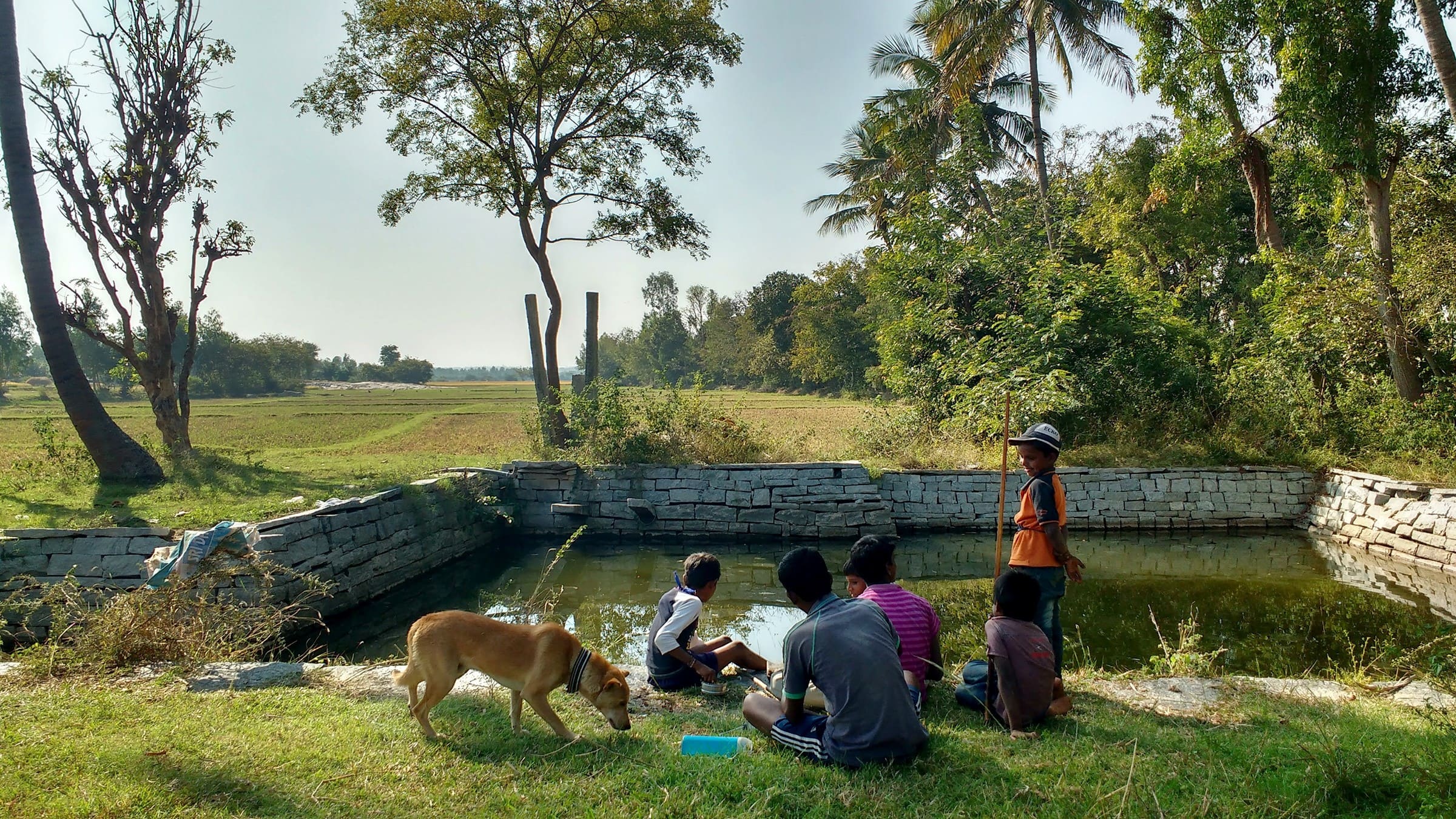
For most Tamil Nadu farms, the best water security plan combines two structures: an open well for daily use, and a farm pond for monsoon harvesting and dry-season buffer. The farm pond also recharges your open well's aquifer through natural seepage. Many districts — especially Salem, Dharmapuri, Krishnagiri, Tirupattur and Erode — offer substantial subsidies under MGNREGA and PMKSY for farm pond construction. See our farm pond excavation page for details.
தமிழில் சுருக்கம்
தமிழ்நாட்டில் பெரும்பாலான பண்ணை நிலங்களுக்கு திறந்த கிணறு (open well) மிகவும் ஏற்றதாகும். நீர்மட்டம் 80 அடிக்குக் கீழ் இருந்தால் — மண்டலா, காவிரி டெல்டா, ஈரோடு, கோயம்புத்தூர், மங்களூர் — திறந்த கிணறு:
- தூய்மையான, குளிர்ந்த நீர் (குறைவான TDS)
- மழை மூலம் இயற்கையாக நிரம்பும்
- 30-50+ ஆண்டுகள் நீடிக்கும்
- PMKSY, MGNREGA மானியம் கிடைக்கும்
- போர்வெல் போல மின்சார பம்ப் தேவை இல்லை
நீர்மட்டம் 100 அடிக்கும் அதிகமாக இருந்தால் (கிருஷ்ணகிரி உயர்ந்த பகுதி, ஓசூர் மலையடிவாரம்) போர்வெல் தேவைப்படலாம். எங்கள் இலவச களம் ஆய்வில் சரியான தீர்வு பரிந்துரைக்கப்படும்.
Bottom line
Don't let aggressive borewell sales push you into the wrong solution. For most TN farms, open well + farm pond is cheaper over its lifetime, gives better water, and qualifies for more subsidy. For the few cases where a borewell genuinely fits, we'll tell you. Either way the first step is the same: get a free site visit and an honest assessment.
FAQ
01What is the main difference between an open well and a borewell?
An open well is a wide-diameter shallow well (typically 4-15 ft wide, 30-80 ft deep) that draws water from the shallow aquifer and recharges naturally with rainfall. A borewell is a narrow tube (4-6 inch diameter) drilled deep (200-1000+ ft) to reach a confined aquifer, with no surface recharge. Open wells are visible and can be inspected; borewells deliver water through a submersible pump.
02Which one is cheaper in Tamil Nadu?
Initial cost depends on depth and soil. In areas with a water table above 80 ft, open wells are typically cheaper. In areas with deeper water tables (Coimbatore, Salem upland, parts of Krishnagiri), borewells are sometimes the only option. Open wells have negligible running cost; borewells need a submersible pump (₹15,000-50,000) and electricity.
03Which lasts longer?
Open wells, when built and maintained correctly, last 30-50+ years. Borewells often dry up in 5-15 years as the water table drops, requiring re-drilling deeper at substantial cost.
04Which gives cleaner water?
Open wells generally give cooler, naturally filtered water that is excellent for livestock and irrigation. Borewells tap deeper aquifers which can have higher mineral content (TDS, fluoride, iron) — common issue in parts of Salem, Erode, Krishnagiri, and Tirunelveli districts.
05Are open wells eligible for government subsidy in Tamil Nadu?
Yes — both open wells and farm ponds qualify for several state and central schemes including PMKSY, MGNREGA, and the TN Agricultural Department's irrigation subsidies. Subsidy rates and eligibility depend on landholding size and farmer category. We help with the paperwork.